 EN
EN ES
ES PT
PT AR
AR RU
RU FR
FR BG
BG HR
HR DA
DA NL
NL DE
DE EL
EL IT
IT JA
JA KO
KO NO
NO PL
PL RO
RO SV
SV TL
TL IW
IW ID
ID LT
LT SR
SR UK
UK VI
VI ET
ET HU
HU MT
MT TH
TH TR
TR FA
FA AF
AF MS
MS SW
SW BE
BE IS
IS AZ
AZ KA
KA LA
LA ZU
ZU KK
KK TG
TG UZ
UZ KY
KY XH
XH

Products
- Plastic Sheet & Plate Extrusion Machine
- Plastic Film Extrusion Machine
- Special Engineering Plastic Extrusion Machine
- Prepreg Tape &Composite Production Line
- Plastic Pipe Extrusion Machine
- Plastic Profile Extrusion Machine
- Plastic Recycling Solution
- Plastic Compounding Machine
- Blow Molding Extrusion Machine
- T-die/Roller/Screw/and/Core Components
- Pulp Molding Machine
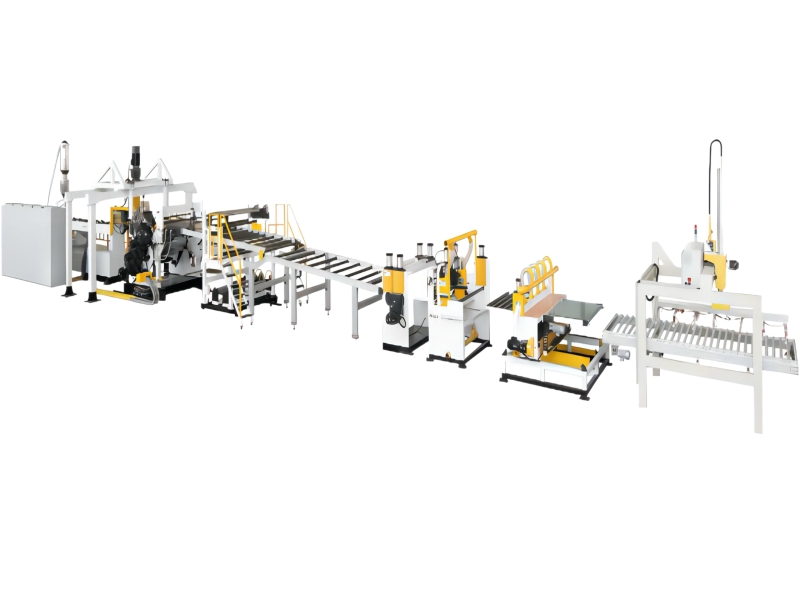
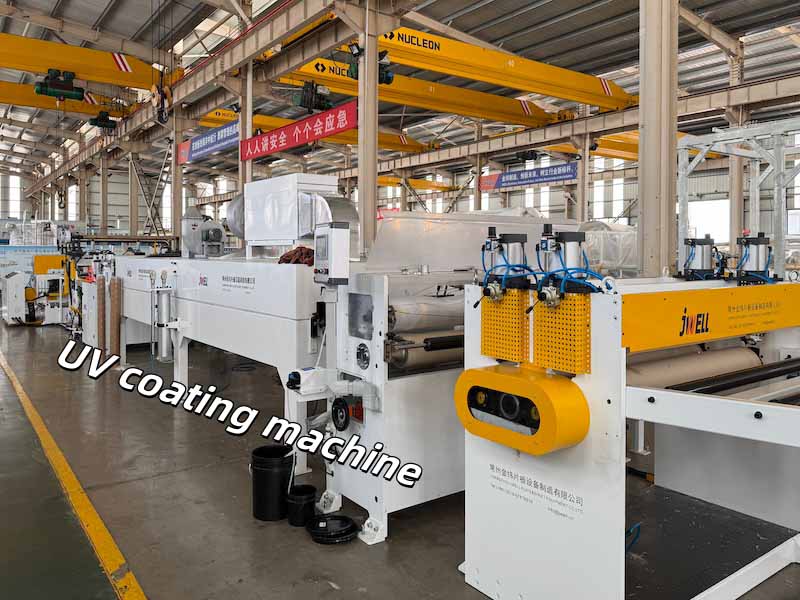

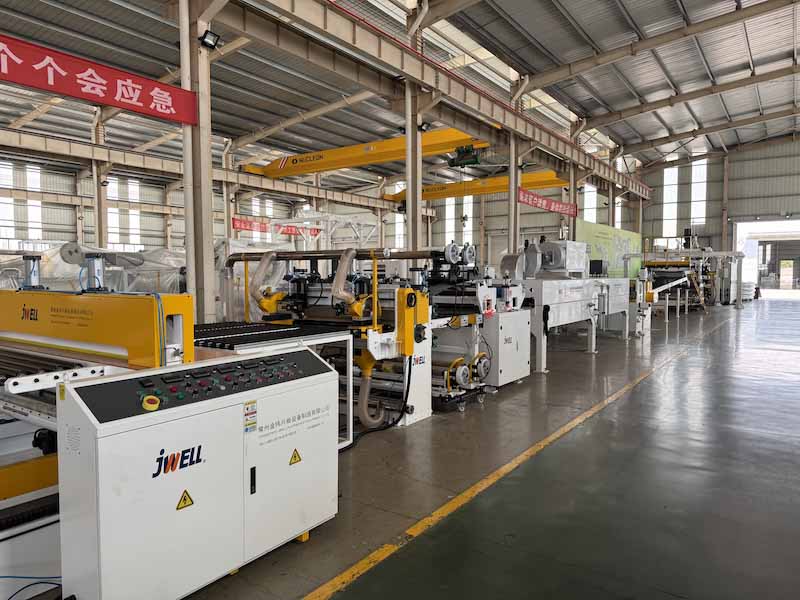
PMMA Decorative Sheets (Matte, Hard Coating, etc.) Eextrusion Line
| Place of Origin: | China |
| Brand Name: | JWELL |
| Certification: | CE ISO TUV UL, QS, GMP |
| Minimum Order Quantity: | ≥1 |
| Price: | To be negotiated |
| Delivery Time: | 90 days |
| Payment Terms: | T/T, L/C |
| Warranty: | One year |
| International Commercial Terms: | FOB, CIF, CFR, EXW |
Product Description
Part 1: A Brief Introduction to the PMMA Sheet Production Line
A PMMA (Polymethyl Methacrylate) sheet, commonly known as Acrylic or organic glass, is primarily produced via the extrusion method. A complete PMMA sheet extrusion line is a highly automated, continuous process consisting of several core components:
Raw Material Handling & Feeding System
● Function: To accurately proportion and mix PMMA resin pellets (or powder) with required color masterbatches and additives (e.g., UV stabilizers, plasticizers).
● Equipment: Large silos, automated weighing systems, mixers, vacuum loaders.
Melting and Extrusion System
● Core Equipment: The Acrylic sheet extruder. The resin mixture enters the extruder via a hopper.
● Process: Inside the extruder, electrical heating and shear heat from the rotating screw plasticize the solid raw materials into a uniform, high-temperature viscous melt.
● Key Components: The screw (critical for plasticizing quality and output), barrel, heating/cooling systems.
Die and Forming System
● Die: The molten PMMA is extruded through a flat-sheet die (T-Die) to form a melt web of specific width and thickness.
● Calendering/Sizing: The hot sheet melt immediately enters a three-roll calender. By adjusting roll speed, gap, and temperature, the sheet is precisely calibrated for thickness, surface finish (e.g., glossy, embossed), and preliminary solidification.
Haul-off and Cooling System
● Function: To steadily pull the sized sheet from the calender and allow it to cool fully and uniformly to room temperature on a long cooling conveyor, preventing deformation and internal stress.
● Equipment: Sets of pull rolls, cooling conveyor beds (or cooling rolls).
In-line Coating System - The Focus for Decorative Sheets
● For high-end decorative PMMA sheets, an in-line coating unit is integrated after the cooling section. This is the key stage for adding functionalities like hardening and matte finishing, detailed below.
Cutting and Winding System
● Winding: For thinner, flexible sheets, large winders are used to roll them into coils for easy transport and further processing.
● Cutting: For thicker, rigid plates, automatic length-cutting saws are used to cut them into standard-sized sheets.
● Stacking: Cut sheets are collected and packaged using automated stackers.
Summary of the Simple Process:
Raw Material → Mixing → Extrusion → Die → Calendering → Cooling → (In-line Coating) → Winding/Cutting → Packaging.
Part 2: Focus - Coating Processes for PMMA Decorative Sheets (Matte, Hard Coating, etc.)
While pure PMMA has high gloss, it is also prone to scratching. As a decorative material (widely used in appliance panels, electronic device housings, automotive interiors, advertising lightboxes, home decor, etc.), it often requires specific surface effects and properties achieved through coating processes.
In-line coating involves applying one or more layers of functional coating solutions onto the sheet substrate before it is fully cooled and shrunk. The coating is then cured, forming a strong bond with the substrate.
Key Coating Processes:
1. Hard Coating / Anti-Scratch Coating
● Purpose: To enhance surface hardness, scratch resistance, and abrasion resistance. Standard PMMA has a pencil hardness of about 2H. After hardening, this can increase to 3H-8H or higher, approaching the hardness of glass, drastically improving durability.
Process Principle:
● Coating Material: Primarily consists of a UV-curable or thermally curable resin system, often reinforced with inorganic nanoparticles like silica (SiO₂) or alumina (Al₂O₃) as fillers, dispersed in an organic resin (e.g., acrylate).
Process:
● Coating: The hard coat solution is applied uniformly using a precision coater (e.g., micro-gravure roller, comma bar, slot-die). Uniformity and thickness control are critical.
● Pre-drying: For solvent-based systems, a low-temperature oven evaporates most solvents to form a preliminary dry film.
Curing:
● UV Curing: The most common method. The sheet passes through a UV curing oven, where UV light activates photo-initiators in the coating, triggering instant cross-linking polymerization to form a hard, dense network.
● Thermal Curing: Heat from a convection oven causes thermal cross-linking.
● Advantage: In-line hard coating offers excellent adhesion, high efficiency, and stable performance. This is a standard feature of a modern Decorative acrylic sheet machine.
2. Matte / Anti-Glare (AG) Coating
Purpose: To eliminate mirror-like reflections, create a soft, matte visual effect, reduce light interference (anti-glare), enhance tactile quality, and help conceal fingerprints.
Process Principle:
● The core concept is "surface micro-roughening." In contrast to the smooth surface achieved by hard coating, matte finishing intentionally creates a uniform, micron-level, irregular structure on the surface to scatter incoming light.
Implementation Methods:
● Adding Matting Agent: Incorporating microparticles such as silica matting powder into the coating solution. These particles form micro-protrusions on the surface after the coating cures, causing light scattering.
● Physical/Chemical Methods: Roughness can also be created through the coating's own phase separation or by using a special embossing roller to perform micro-embossing on the coating before it is fully cured.
● Process Flow: Similar to the hard coating process: Coating → (Pre-drying) → Curing. The key to controlling the matte effect lies in the type, particle size, and concentration of the matting agent, as well as the coating thickness. The degree of matte effect is typically quantified by the "haze" value.
● Combined Process: Often, Anti-Glare (AG) and Hard Coating (HC) are combined into a single, integrated AG+HC layer, providing both a matte finish and abrasion resistance.
3. Other Functional Coatings
● Anti-Fingerprint (AF) Coating: A topcoat, often based on fluorosilanes, applied over the hard coat. It significantly reduces the surface energy, making it difficult for sweat and oils to adhere, and easy to wipe off if they do.
● Anti-Static Coating: Incorporates antistatic agents to prevent the adsorption of dust.
● Anti-Reflective (AR) Coating: Involves applying optical multi-layer films to reduce surface reflection and increase light transmittance, commonly used for high-end display cover panels.
Typical Coating Structure for a Decorative PMMA Sheet:
A high-end decorative PMMA sheet often features a multi-layer coating structure, for example:
● PMMA Substrate
● Primer (optional, for enhanced adhesion)
● Functional Layer (e.g., AG matte layer)
● Hard Coat (HC) (provides abrasion resistance)
● Top Coat (e.g., AF anti-fingerprint layer)
In-line coating technology enables the application and curing of these multiple layers sequentially within a single PMMA sheet extrusion line, by incorporating multiple coating and curing stations. This allows for the integrated production of high-value, fully-functionaled products—a significant advantage unmatched by offline coating methods.
Summary
The in-line coating process on a PMMA sheet extrusion line is the core technology that transforms a basic material into a high-end decorative product. Through the precise application and curing of functional materials like hardeners and matting agents, it grants the sheet scratch resistance, a matte appearance, and anti-fingerprint properties. This meets the dual demands of modern electronics, home appliances, and other industries for both aesthetics and durability, making it a defining feature of a modern decorative acrylic sheet machine.
Applications
Polymethyl methacrylate (PMMA) sheets are highly valued for their optical transparency, weather resistance, and plasticity. The main applications include:
● Advertising and signage: display cases, signboards, display stands.
● Architecture: skylights, windows, partitions, sanitary fixtures.
● Transportation: vehicle windows, interior panels, aircraft glass.
● Lighting: light diffusers, LED light guide plates.
● Consumer products include furniture surfaces, home decorations, and cosmetic packaging.
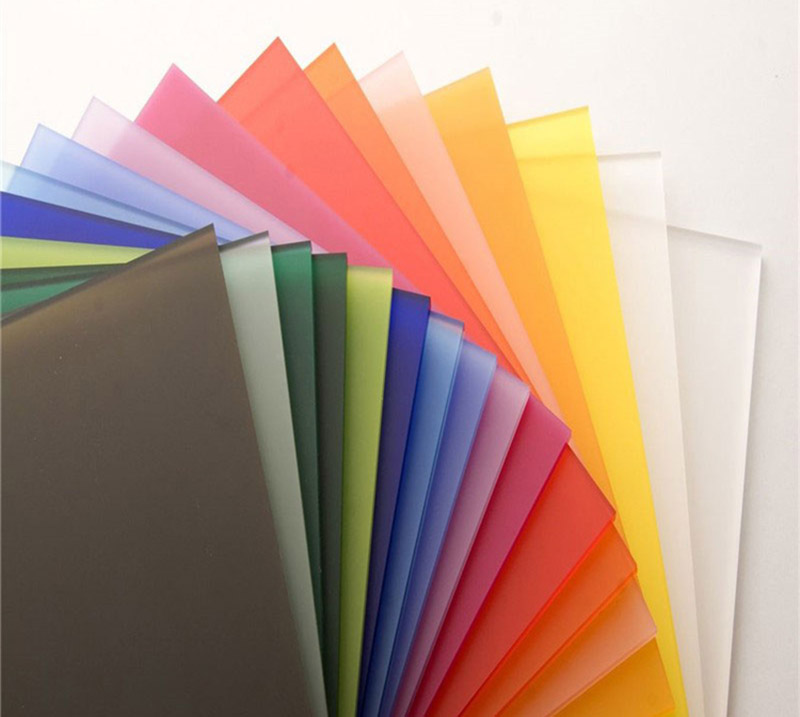
Key: PMMA decorative sheets
PMMA decorative sheets are base materials that have been treated with special coatings (such as hard coatings, matte coatings) to enhance their aesthetic and functional properties.

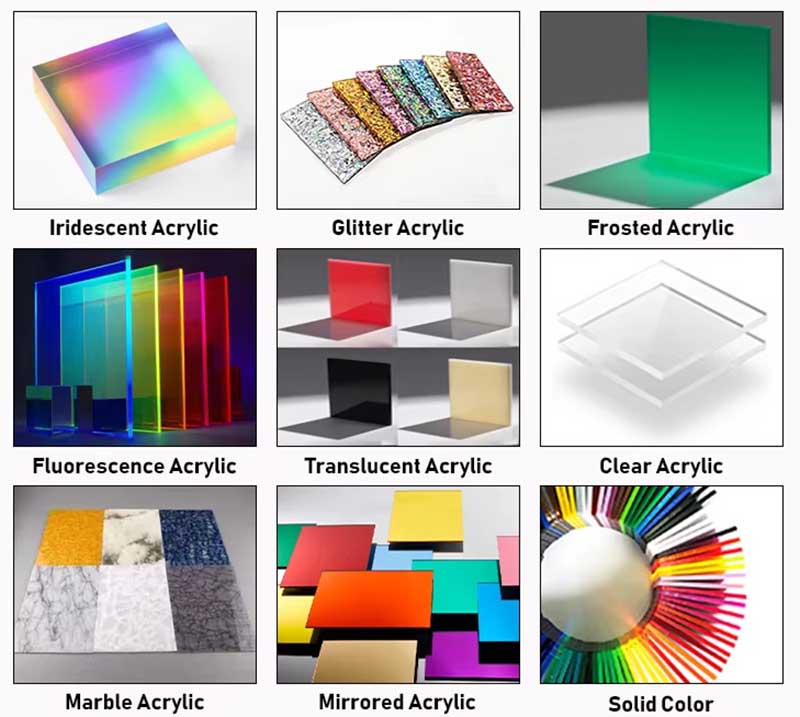
Main applications
● Household appliances: refrigerator and washing machine panels (require AG+AF+hard coating).
● Consumer electronics: device casings, TV frames, speaker panels.
● Automotive interiors: dashboard decorations, center console panels.
● Interior design: cabinet surfaces, decorative wall panels.
● Applications of UV-treated PMMA sheets: "UV treatment" usually refers to the use of ultraviolet curing of advanced functional coatings (such as hard coatings, anti-glare coatings, anti-stain coatings). This process can form highly durable cross-linked surfaces.
Advantages of UV curing:
● Instant curing, enabling high-speed production.
● Excellent performance: high hardness, wear resistance, and strong chemical stability.
● Environmentally friendly: typically 100% solid, with no volatile organic compound emissions.
High-end applications after UV treatment:
High-end home appliances and electronic products interface panels:
● Example: control panels of smart refrigerators, washing machines, and air conditioners.
● Requirements: combine anti-glare (AG)+ hard coating (HC)+ anti-stain (AF) properties to achieve scratch resistance, readability under light, and easy cleaning.
Automotive cockpit display screens:
● Example: integrated screens for digital dashboards and center consoles.
● Requirements: extremely high scratch resistance (>8H hardness), anti-glare, and high-temperature stability.
Industrial and medical human-machine interfaces (HMI):
● Example: touch screens for industrial control, medical equipment, and ATMs.
● Requirements: high durability, able to withstand frequent contact, wear, and chemical cleaning.
● High-end decorative laminated sheets, such as those used in laptops and high-end device casings.
● Process: Laminate thin PMMA decorative film layers onto the substrate (e.g., aluminum, plastic).
● Advantages: provide excellent aesthetics and scratch resistance for structural materials. Abstract:
Through advanced coating and UV curing technology, PMMA sheets have transformed from ordinary transparent materials into high-performance components. They offer a solution that combines aesthetics, touch, and durability, becoming key materials in high-end applications such as consumer electronics, household appliances, and automotive interiors. This capability is a notable feature of modern decorative acrylic sheet machines.
Specifications
| Main technical parameter | |||
| Model | JWS130/38-2400 | JWS120/38-1500 | JWS120-1300 |
| Material | PC,PMMA,GPPS,ABS | PC,PMMA,GPPS,ABS | PC |
| Products Width | 2100mm | 1220mm | 1000mm |
| Products Thickness | 1.0-10mm | 1.0-10mm | 0.125-1.2mm optical |
| Capacity(Max.) | 550kg/h | 450kg/h | 400kg/h |
Competitive Advantage
● Aesthetics: offer high-gloss, matte, metallic, or textured surface treatments.
● Functionality: scratch-resistant, fingerprint-resistant (AF), glare-resistant (AG), and chemically resistant.
● Durability: surface hardening extends the product's lifespan.
Packing & Delivery
Certification


