Home > showlist
Profile extrusion lines are cool machines that produce products we use every single day. There’s some neat technology in these machines, and they’re in a way an essential part of manufacturing. Take a good look at how profile extrusion lines function and why they are so valuable.
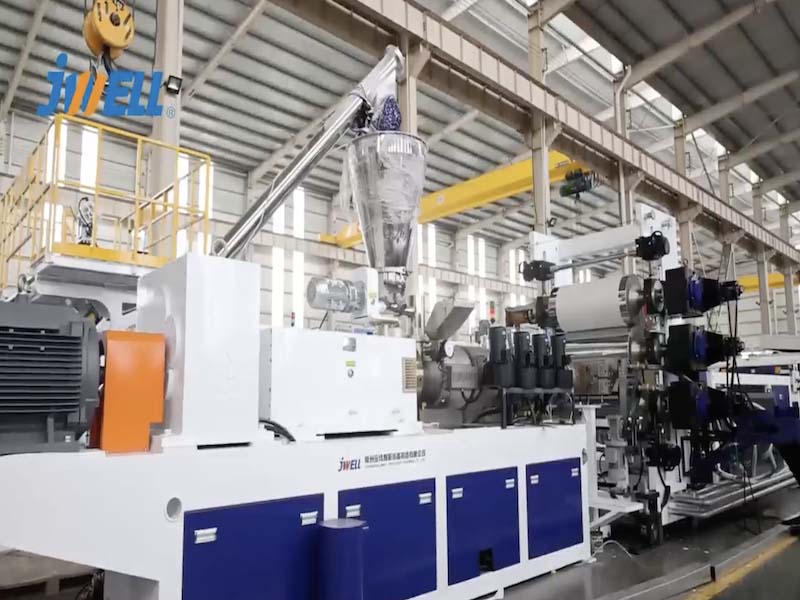
Profile extrusion lines are machines that transform raw materials, such as plastic pellets, into continuous, long, connected shapes, or profiles. These profiles can be used to create things such as pipes, window frames or even toys. It begins by melting raw materials and forcing the resulting substance, or the dough, through a die to make it take the right shape. Then, the profiles are cooled and cut to the necessary length.
Extrusion lines are important for the manufacturing sector as they help in the large scale production of products with ease. These machines enable manufacturers to produce consistent, high quality items for less. This keeps consumer prices down and the products meet predetermined standards.

Key profile extrusion line components All Profile extrusion lines have common elements that when assembled in a line make the finished product as ease. These are an extruder (which converts the raw material into liquid), a die (through which the material is converted into a desired shape), a cooling system (that cools and solidifies the profiles) and a cutting system (which cuts the profiles to desired lengths). Every part means some thing in the extrusion process.

In profile extrusion lines Quality control is very important so that final product must adhere to the specifications. By keeping a close watch on things like temperature, speed and pressure, manufacturers can check other factors in the production recipe and tweak them, if necessary. This reduces the possibility of defects and increases product quality. VOLTAGE REGULATOR(AVR)

The profile extrusion line technology has greatly evolved in past years. One of the first of these is in the area of automation, where efficiencies have been realized and the likelihood of human error has been minimized. Moreover, the development of materials and constructions have broadened the scope of what can be made on an extrusion line. These developments have rendered profile extrusion lines still more versatile and indispensable in the production field.
 EN
EN ES
ES PT
PT AR
AR RU
RU FR
FR BG
BG HR
HR DA
DA NL
NL DE
DE EL
EL IT
IT JA
JA KO
KO NO
NO PL
PL RO
RO SV
SV TL
TL IW
IW ID
ID LT
LT SR
SR UK
UK VI
VI ET
ET HU
HU MT
MT TH
TH TR
TR FA
FA AF
AF MS
MS SW
SW BE
BE IS
IS AZ
AZ KA
KA LA
LA ZU
ZU KK
KK TG
TG UZ
UZ KY
KY XH
XH