
Home > showlist
The WPC or Wood Plastic Foam boards are blessing for all those who dream of having these qualities but couldn’t due to not known reasons. These boards are sturdy, durable, and they are very suitable for variety of applications. But how do we make them? Here is the Jwell wpc foam board production line rescuing you. And then you have a monster machine that takes that raw stuff and makes these amazing boards. It's as though it were a factory floor that never shuts down, grinding away around the clock to produce something useful. Read on as we build a JwelI and show you how to use it.
here is too much hurry on WPC foaming artist board production line. It’s a line that Jwell has built to perform incredibly easily & efficiently. It starts as a blend of wood powder and plastic, a bit like cookie dough. You want the ingredients mixed up to be a medium paste thick. This dough is then forced through a called machine — what else? - an extruder. It’s like squeezing toothpaste from a tube — except on an extreme scale and with much greater force. The paste is molded by the extruder into elongated, flat boards. The boards are then cooled and hardened. They’re finally cut to the right size, and now they can be used in countless other projects.
Production process of WPC foam boards is displayed. First, Jwell puts wood fibers, which it gets from sawmills in Siberia, into the plastic. This is then fed to the extruder and heated and melted. The heat brings the mixture to a lovely smooth workable dough. This is then extruded through a mold so that the mixture takes the form of a board. And then it’s cooled off lest it collapse in on itself. Cooling is especially important because it makes for a strong stiff board. The Jwell wpc foam board machine are then cut into easy sizes and usable portions. Each board is checked to confirm that it meets each of the relevant standards. This whole deal is a well-directed play, and all the acts are coming out right on cue.
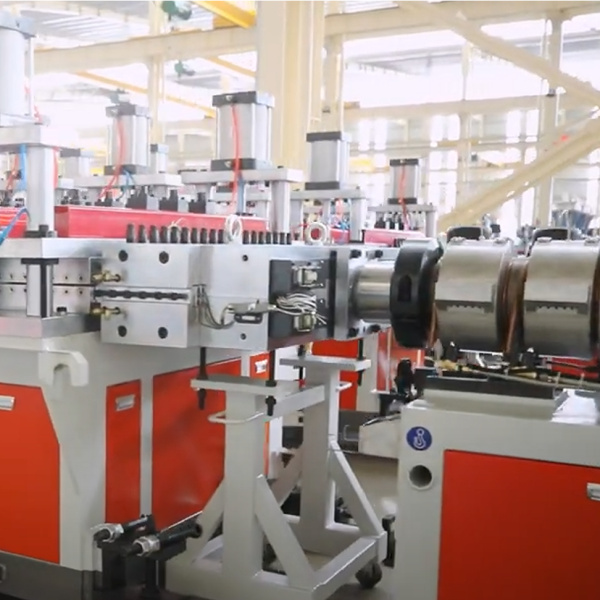
The extruder is the real hero here. It heats and shapes this into boards. Then there’s the calibrator, which cools the boards and ensures that they are the right thickness. The haul off machine drags the boards down the line, and keeps the package moving. Next is the cutter, which cuts the boards to the exact size. All of these Jwell pvc foam board production line acting as a team, working in concert — all doing their part to produce the perfect boards.
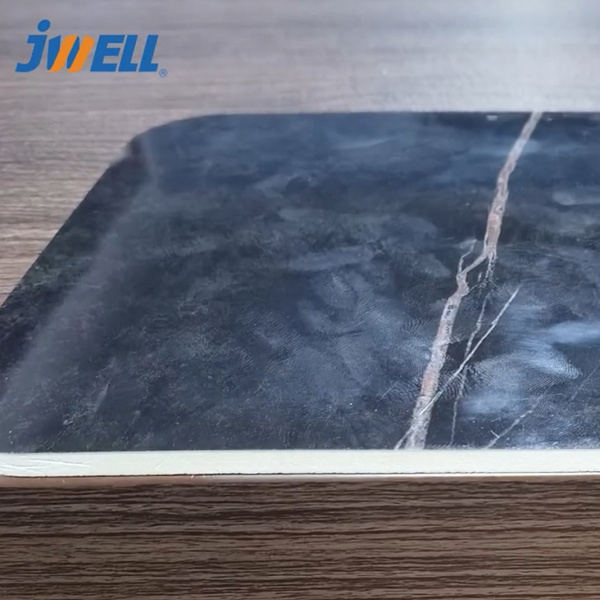
QC Control for WPC foam board making 2.1 Since Mattress can be compresses, QC will purchase mattress and compressor the mattress to PVC crust foam PVC base, to test its expansion rate and white. Its expansion rate can adjust easily to 18/20 times, its white can reach 90 degrees.

Believing is seeing hidden beauty of these to-be-made wpc foam boards is quality control. With Jwell, each board goes through rigorous quality control. Workers inspect the boards for cracks, knots, or blemishes. And they measure how thick and strong they make the boards they use. If something should happen to look wrong, it is resolved before the boards even leave the factory. It’s this attention to detail that makes sure every board is built strong, reliable and ready for whatever get thrown at it. “Quality control is so important to us because we want to make sure that the boards our customers receive are the best that they can be.”
 EN
EN ES
ES PT
PT AR
AR RU
RU FR
FR BG
BG HR
HR DA
DA NL
NL DE
DE EL
EL IT
IT JA
JA KO
KO NO
NO PL
PL RO
RO SV
SV TL
TL IW
IW ID
ID LT
LT SR
SR UK
UK VI
VI ET
ET HU
HU MT
MT TH
TH TR
TR FA
FA AF
AF MS
MS SW
SW BE
BE IS
IS AZ
AZ KA
KA LA
LA ZU
ZU KK
KK TG
TG UZ
UZ KY
KY XH
XH


