 EN
EN ES
ES PT
PT AR
AR RU
RU FR
FR BG
BG HR
HR DA
DA NL
NL DE
DE EL
EL IT
IT JA
JA KO
KO NO
NO PL
PL RO
RO SV
SV TL
TL IW
IW ID
ID LT
LT SR
SR UK
UK VI
VI ET
ET HU
HU MT
MT TH
TH TR
TR FA
FA AF
AF MS
MS SW
SW BE
BE IS
IS AZ
AZ KA
KA LA
LA ZU
ZU KK
KK TG
TG UZ
UZ KY
KY XH
XH
Both PC polycarbonate sheet and acrylic sheet appear to be transparent plastic on the surface, but their materials and uses are different. PC polycarbonate sheet is made of polycarbonate material, also known as unbreakable glass or solid sheet, while acrylic sheet, whose chemical name is polymethyl methacrylate (PMMA), is also called plexiglass. PC polycarbonate sheet, chemically known as polycarbonate (PC), has strong impact resistance, being 250-300 times that of ordinary glass, 30 times that of acrylic sheet, and 20 times that of tempered glass. Its light transmittance is over 82%, and it can be cold-bent and hot-formed, with good processing performance. It can withstand low temperatures of minus 40 degrees Celsius and high temperatures of 120 degrees Celsius. It is lightweight, easy to install, and can block ultraviolet rays. However, its surface is prone to scratches (surface hardening can be done).
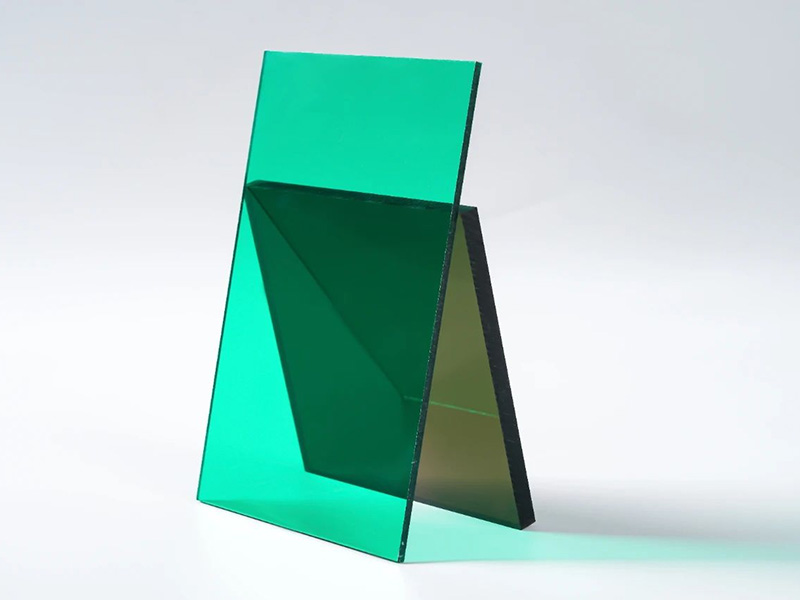
Acrylic sheet is a kind of organic glass, and polymethyl methacrylate is its chemical name. Acrylic is the name given to this material in Hong Kong. Some people might misunderstand that organic glass is just a kind of glass, but in fact, it is a kind of plastic. Acrylic sheet belongs to thermoplastic and has excellent plasticity, with a delicate and beautiful appearance. Acrylic sheets can be classified into cast sheets, extruded sheets and molding powders. For current technology, there are mainly four processing methods: the first is casting molding; the second is injection molding; the third is extrusion molding; and the fourth is thermoforming acrylic.

Differences
1. PC Impact Resistant Board: Resistant to impact, unbreakable, with strength exceeding that of tempered glass and acrylic sheets by hundreds of times. It is tough, safe, theft-proof, and bulletproof with the best performance. 2. Acrylic Board: Good resistance to weathering and acid-base, and will not develop yellowing or hydrolysis due to long-term exposure to sunlight and rain. It has a long lifespan, three times longer than other material products. It has excellent light transmittance, reaching over 92%, requiring less lighting intensity and saving electricity. It has a strong impact resistance, sixteen times that of ordinary glass. 3. Differences between PC Impact Resistant Board and Acrylic Board The basic raw materials are different. A simple method is that acrylic is relatively brittle, and its impact resistance is not as good as that of PC Impact Resistant Board. A hammer will damage acrylic, but PC Impact Resistant Board will not. Surface light transmittance, for new material PC Impact Resistant Board, has a high light transmittance and looks very transparent, while acrylic is a bit hazy. Moreover, acrylic is prone to aging, but PC Impact Resistant Board can be made to resist aging. Under sunlight, the reflected light from PC Impact Resistant Board is very even, which can be seen with the naked eye.
Advantages and Disadvantages of Acrylic Sheets
Advantages of acrylic sheets
(1) Excellent weather resistance: Acrylic sheets have excellent adaptability and are highly compatible with the natural environment. Even when exposed to sunlight, wind, and rain for a long time, their performance will not change. They have good anti-aging properties and can be safely used outdoors.
(2) Good plasticity: It can be easily processed into special products such as glass, partitions, and bathtubs.
(3) Good transparency: It is a colorless transparent organic glass sheet and is a material with excellent transparency. The light transmittance is over 92%. It is often used for partitions and gives a blurry and indistinct visual aesthetic.
Disadvantages of acrylic sheets
Although acrylic sheets are very excellent, they also have some shortcomings. Generally, ordinary acrylic sheets have low hardness, poor heat resistance, and low elongation. Therefore, they are prone to cracking, breaking, and deformation, and their color is unstable. During use, they are prone to shedding. The formed bathtubs are usually due to the large stretching at the bottom, which easily causes color changes. Usually, you can see the "whitening" or "yellowing" color changes at the corners at the bottom.
Advantages of the Tensile Panel
(1) Light transmittance: The light transmittance of the tensile panel can reach up to 89%, comparable to that of glass. The UV-coated panel will not yellow, fog up or have poor light transmission when exposed to sunlight. After ten years, the light transmittance loss is only 10%, while the PVC loss rate is as high as 15% - 20%, and the glass fiber is 12% - 20%.
(2) Impact resistance: The impact strength of the tensile panel is 250 - 300 times that of ordinary glass, 30 times that of acrylic board of the same thickness, and 2 - 20 times that of tempered glass. Even with a 3kg hammer dropped from two meters, there will be no cracks. It is known as "unbreakable glass" and "echo steel".
(3) UV resistance: The PC panel has a UV-resistant coating on one side and anti-condensation treatment on the other side. It integrates the functions of UV resistance, heat insulation and anti-fogging. It can block ultraviolet rays from passing through and is suitable for protecting valuable artworks and exhibits from being damaged by ultraviolet rays.
(4) Light weight: Its specific gravity is only half that of glass, saving costs for transportation, lifting, installation and support frame.
(5) Flame retardancy: According to the national standard GB50222—95, the tensile panel is classified as a Class 1 non-flammable material, i.e., B1 grade. The ignition point of the PC panel is 580℃, and it extinguishes by itself after being removed from the fire. It does not produce toxic gases during combustion and does not accelerate the spread of the fire.
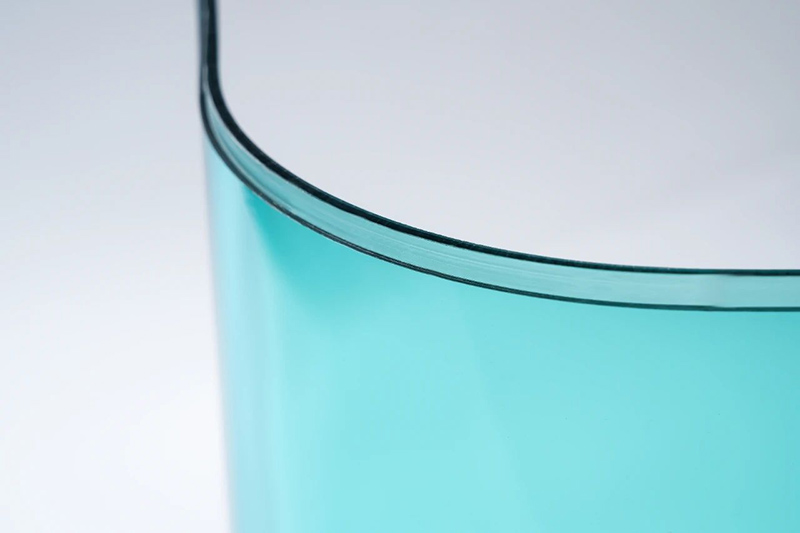
(6) Flexibility: It can be bent coldly on the construction site according to the design drawing, installed as arches, semi-circular ceilings and windows. The minimum bending radius is 175 times the thickness of the panel, and it can also be hot-bent.
(7) Sound insulation: The sound insulation effect of the tensile panel is obvious. It has better sound insulation performance than the same thickness of glass and acrylic board. Under the same thickness conditions, the sound insulation of the tensile panel is 5 - 9 DB higher than that of glass. It is the preferred material for highway sound barriers in the international community.
(8) Energy saving: It keeps cool in summer and warm in winter. The tensile panel has a lower thermal conductivity (K value) than ordinary glass and other plastics. Its heat insulation effect is 7% - 25% higher than that of the same glass. The maximum heat insulation of the tensile panel can reach 49%. This significantly reduces heat loss and is an environmentally friendly material for buildings with heating equipment.
(9) Temperature adaptability: The PC tensile panel does not undergo cold brittleness at -40℃ and does not soften at 125℃. Its mechanical and mechanical properties do not show significant changes in harsh environments.
(10) Weather resistance: The PC tensile panel maintains the stability of all physical indicators within the range of -40℃ to 120℃. The artificial climate aging test lasts for 4000 hours, with a yellowing degree of 2 and a reduction in light transmittance of only 0.6%.
(11) Anti-condensation: When the outdoor temperature is 0℃ and the indoor temperature is 23℃, with an indoor relative humidity lower than 80%, the inner surface of the material does not condense. The dew will flow along the surface of the panel and will not drip.
Identification Method
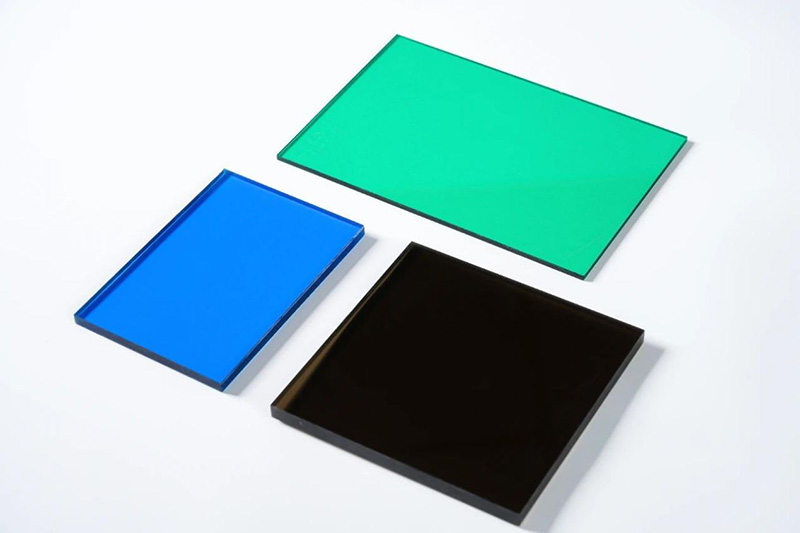
First: Acrylic (Acetal) is divided into: extruded plate and cast plate. The identification of the extruded plate is that it has good transparency, and the original identification method is to burn it with fire. When burning, the flame is clear, no smoke is produced, there are bubbles, and when extinguishing, long fibers can be pulled out. The identification of the cast plate is: it has higher transparency, and when burned with fire, there is no smoke, there are bubbles, and there is a hissing sound. When extinguishing, there are no fibers.
Second: PC durability board, the identification method is: high transparency, good impact resistance, cannot be broken, when burned with fire, it is basically not burnable, flame retardant, and some black thick smoke will be emitted.
Applications
1. PC endurance board applications: Suitable for extraordinary decorations in gardens, amusement venues and rest areas; suitable for interior decoration of commercial buildings, modern urban buildings' facades;
● Suitable for transparent containers for aviation, motorcycle front windshields, aircraft, trains, ships, cars, yachts, submarines and glass military police shields;
● Suitable for telephone booths, advertising road signs, light box advertisements, and the layout of exhibitions and displays;
● Suitable for instruments, meters, high and low voltage switch cabinet panels and military industries;
● Suitable for high-end interior decoration materials such as walls, ceilings, screens, etc.;
● Suitable for sound insulation barriers on highways and urban elevated roads;
● Suitable for agricultural greenhouses and breeding sheds;
● Suitable for modern ecological restaurant ceilings;
● Suitable for bicycle sheds, balcony sunshade and rain shelters, and roof rest pavilions in all units or residential areas;
● Suitable for office buildings, department stores, hotels, villas, schools, hospitals, sports venues, entertainment centers and public facilities' light-reflecting ceilings, etc.
2. Applications of PMMA acrylic sheets: PMMA is lightweight, inexpensive, and easy to shape. Its shaping methods include casting, injection molding, mechanical processing, hot forming, etc. Especially injection molding can produce in large quantities, with a simple process and low cost. Therefore, its application is becoming increasingly widespread. It is widely used in instrument parts, car headlights, optical lenses, transparent pipes, etc. Acrylic is a better new material for manufacturing sanitary ware after ceramics. Compared with traditional ceramic materials, acrylic has the following advantages in addition to unparalleled high brightness: good toughness, less prone to damage; strong repairability, just by dipping a soft foam in toothpaste, the sanitary ware can be wiped clean; soft texture, no icy and stinging sensation in winter; bright colors, meeting the individual pursuit of different tastes. Acrylic sanitary ware is used to make sinks, bathtubs, toilets, etc., which are not only exquisite in style, durable, but also environmentally friendly. The radiation it emits is almost the same as that of the human body's own bones. Acrylic sanitary ware first appeared in the United States and has occupied more than 70% of the international market. Due to the difficulty and high cost of acrylic production, there are many low-cost substitutes on the market. These substitutes are also called "acrylic", but they are actually ordinary organic boards or composite boards (also known as sandwich boards). Ordinary organic boards are made by casting with ordinary organic glass cracking materials and pigments. The surface hardness is low, and it is prone to fading. After sanding with fine sand, the polishing effect is poor. The composite board only has a very thin layer of acrylic on the surface, with ABS plastic in the middle. It is prone to delamination due to thermal expansion and contraction during use. The authenticity of acrylic can be identified from the subtle color differences and polishing effects of the board section.
1. Architectural applications: display windows, soundproof doors and windows, light covers, telephone booths, etc.
2. Advertising applications: light boxes, signs, signs, display stands, etc.
3. Transportation applications: vehicle doors and windows of trains, cars, etc.
4. Medical applications: infant incubators, various surgical medical equipment
5. Daily use applications: instrument surface panels and covers, etc.
6. Lighting applications: ceiling lights, chandeliers, street lamp covers, etc.
Changzhou Jwell Machinery Co., Ltd. Established in 1997, JWELL has been ranked as top 1 in the Chinese extrusion industry for more than 15 consecutive years. As a global supplier of complete solutions for extrusion technology. JWELL has a long history and rich technology accumulation. With more than 1,016 patents and 9 production bases. Attending for endurance, striving for innovation and focus on customers' experience is JWELL'S permanent enterprise spirit, JWELL people actively confront with new industrial challenge and new materials and new processes. We constantly accelerate the research and development of new technologies, focus on the new energy utilization, automotive lightweight composite materials and medical disposables and medical packages. We commit to the cutting-edge technology of plastic processing and recycling. Continuously innovate and develop extrusion equipment in the polymer subdivision field. JWELL has a modern assembly workshops, 9 large components processing workshops and precision CNC machines. Unique processing technology, we strive to ensure the stability of each component. Pay attention to parts inspection and quality control and ensure the precision and reliability of all parts. Quality excellent, perfect as one.exceptional customer satisfaction. We understand and respect customers' vision and strategy. With our professionalism and dedication, we continuously improve the quality of our products, provide customers with overall solutions. And constantly create value for customers.


