 EN
EN ES
ES PT
PT AR
AR RU
RU FR
FR BG
BG HR
HR DA
DA NL
NL DE
DE EL
EL IT
IT JA
JA KO
KO NO
NO PL
PL RO
RO SV
SV TL
TL IW
IW ID
ID LT
LT SR
SR UK
UK VI
VI ET
ET HU
HU MT
MT TH
TH TR
TR FA
FA AF
AF MS
MS SW
SW BE
BE IS
IS AZ
AZ KA
KA LA
LA ZU
ZU KK
KK TG
TG UZ
UZ KY
KY XH
XH
Anyone engaged in packaging procurement or production will handle PET day after day. Transparent food trays, electronic product blister packaging, and printable films - PET is everywhere. It has high transparency, good strength, and stable barrier properties.
However, stable production of high-quality PET sheets and smooth operation of thermoforming production lines have never been easy. Countless subtle craftsmanship details can determine your yield. Based on my years of on-site debugging, machine debugging, and troubleshooting experience in the PET workshop, I would like to break down PET material properties, sheet extrusion workflow, transparency optimization, hot forming tips, formula design, coating and lamination, recycling technology, and common defect repair.
1. Basic PET Properties & Real-Life Applications
PET (Polyethylene terephthalate) is a crystalline thermoplastic polyester formed by the condensation of terephthalic acid and ethylene glycol. Its highly ordered molecular chains result in a crystallinity range of 40% to 60%, which endows the material with solid mechanical strength and heat resistance. PET is classified according to its intrinsic viscosity and is used for fiber spinning, film manufacturing, bottle blowing, and sheet extrusion. Cross-level mixing of raw materials always leads to unstable sheet quality.
Packaging manufacturers favor PET for four practical advantages:
Excellent transparency: The glass-like appearance helps products sell better on shelves
High tensile strength: equivalent to aluminum foil, approximately 9 times that of PE, and three times that of PA and PC
Reliable barrier effect: low permeability to oxygen, moisture, and CO ₂ extends food shelf life
Food safety characteristics: non-toxic and odorless, fully meeting the requirements for food contact and use.
The most troublesome aspect of the production process is the strong hygroscopicity of PET. The ester groups within PET molecules actively attract water; Once exposed to air, PET particles can absorb up to 0.4% moisture under normal environmental conditions. If insufficiently dried particles enter the extrusion process, hydrolysis will occur inside the barrel, polymer chains will break, IV will change, and the final sheet will exhibit bubbles, brittleness, and yellowing. In fact, insufficient drying is the cause of most quality problems in PET sheet factories.

2. On-site PET Sheet Extrusion Technology
Moisture control remains the primary task in PET sheet extrusion. Traditional process flow: pre-crystallization → dehumidification and drying → melt extrusion. The factory standard requires the dryer to reduce the moisture content of the particles to below 50ppm before sending them into the extruder. This classic process can provide stable quality, but it consumes a lot of electricity and generates long drying waiting times during material conversion, limiting production flexibility.
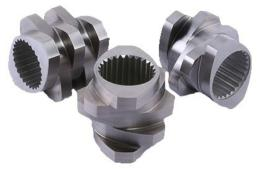
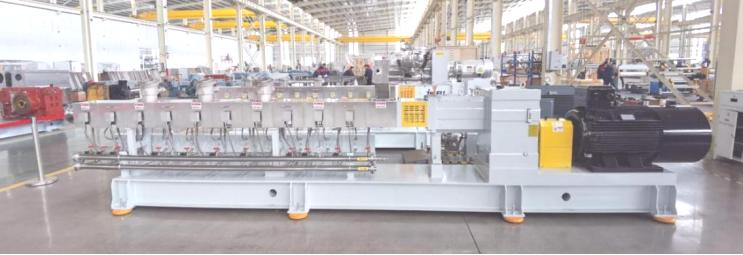
In recent years, global factories have gradually adopted non-drying extrusion technology. The specially designed twin-screw extruder allows for direct processing of high-moisture PET particles or recycled bottle flakes without the need for pre-drying. For example, the Jwell twin-screw extruder has a large vacuum extraction area, which enables continuous vacuum production lines. It can process PET with an initial moisture content of up to 1%, while limiting the loss of intrinsic viscosity to within 0.03 dL/g.
The benefits of no-drying extrusion are obvious: crystallization and drying equipment can be eliminated, power consumption can be reduced from about 0.5 kWh per kilogram to 0.3 kWh, material switching speed is greatly accelerated, and there is no need to wait for drying cycles. Nevertheless, the twin-screw design determines success or failure.
3. Practical Ways to Achieve High Transparency
PET is naturally transparent, but manufacturing optical-grade, low-haze sheets requires precise crystallization control. Crystallinity directly leads to light scattering. Finer and uniformly distributed microcrystals always lead to higher transparency.
Three practical crystallization control methods are widely used on production lines:
1. Co-polymer modification: Adding isophthalic acid or other co-monomers during the polymerization process to disrupt the regularity of the molecular chain and slow down the crystallization rate.
2. Temperature regulation: Maintain the melt temperature at 254-256 ° C, and use a precisely calibrated cooling roller temperature gradient to lock PET in a low crystallinity state through rapid cooling.
3. Adding nucleating agents: Nucleating agents based on phosphate or sorbitol will produce uniform small crystals, avoiding the formation of large spherical crystals that produce fog.
Optical PET film has stricter standards: transmittance above 90% and haze below 0.5%. Besides crystallization control, the purity of raw materials cannot be ignored. Metal fragments, gel particles, and foreign pollutants in the resin will produce light scattering crystal spots. Most factories combine nano silica anti-adhesion agents, anti-reflection additives, and antioxidants to maintain stable optical performance.
4. PET Thermoforming Operation Tips
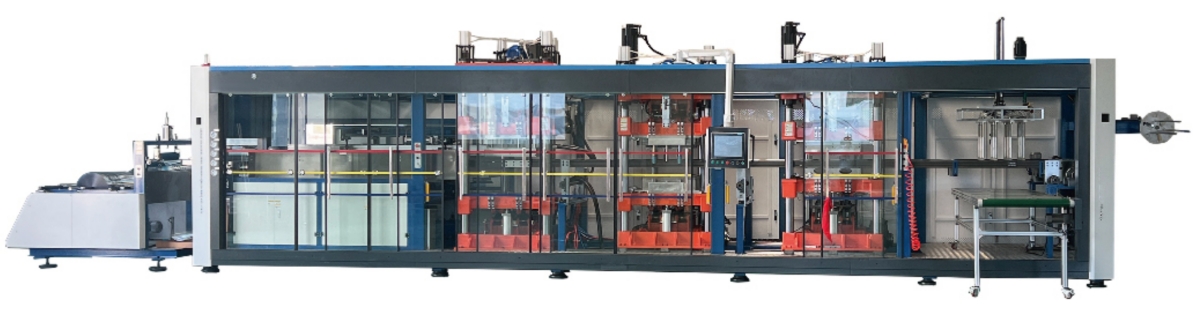
Thermoforming is the most common downstream processing method for PET sheets. The principle is simple: heat the sheet until it becomes soft, and then use a thermoforming machine to shape it. A complete hot forming production line consists of rewinding, heating furnace, forming mold, vacuum system, and trimming unit.
If not adjusted properly on site, three parameters can easily lead to quality defects:
Heating temperature: The molding window of PET is extremely narrow. Insufficient heating leads to poor stretching, whitening, or cracking near corners; Overheating can lead to thermal degradation and loss of melt strength.
2. Vacuum system: It must have stable vacuum pressure and fast vacuum pumping speed; Otherwise, it is impossible to replicate the intricate details of the mold fully.
3. Mold temperature: Undercooled molds capture internal stress through rapid cooling, leading to later product warping; Hot molds will slow down the demolding speed and reduce overall production efficiency.
PET thermoformed products include food trays, fruit containers, biscuit inserts, electronic blister packaging, and pharmaceutical blister packaging. Different applications require customized sheet thickness, stretch ratio, and mold radius. Stable high yield largely relies on accumulated workshop debugging experience.
5. Formulation Design & Auxiliary Machine Selection
Optimizing the formula is an economically effective method to improve the performance of PET products. The functions of commonly used additives are as follows:
1. Nucleating agent: Refine crystal structure, improve transparency and heat resistance;
2. Chain extender: Repairs broken molecular chains generated during thermal degradation during recycling and processing, restoring melt strength.
3. Toughening agent: Adding MBS resin and modified SEBS with good PET compatibility in a ratio of 0.1% -1% can increase impact toughness by 30% -50% without sacrificing transparency.
4. Antioxidant and heat stabilizer system: prevents thermal oxidative aging during the extrusion process.
In addition to the main extruder, the drying system, weight feeder, and edge trimming and recycling device are also essential supporting equipment. Because drying consumes the highest power on the entire PET production line, selecting an appropriate dryer greatly reduces long-term manufacturing costs.
6. Coating & Lamination Industrial Applications
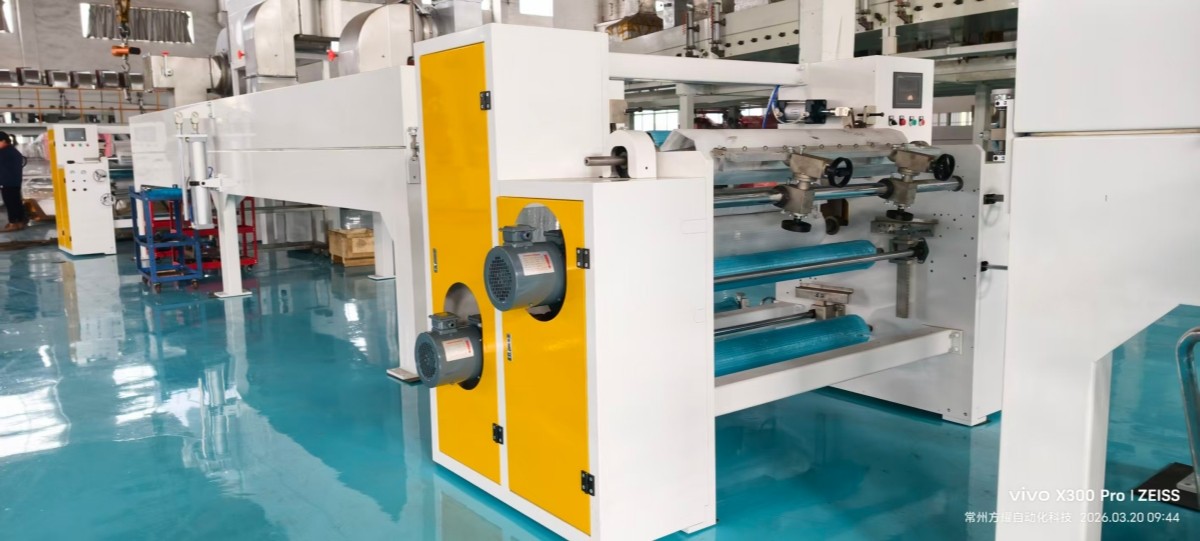
Coating and lamination provide customized surface functions for PET films for different industries:
1. Optical thin film coating: Coating anti-reflection, anti-blue light, and hard coatings on PET substrates for display and touch screen applications. High-transparency anti-blue-light optical PET usually adds a benzotriazole blue-light absorber and a nano silica additive to balance transparency and blue-light shielding performance.
2. Environmentally friendly coated textiles: Traditional PU-coated fabrics are difficult to recycle. PET ecological coating is matched with polyester fabric to form a single material structure, which can be fully recycled without disassembly after processing. Its VOC emissions are 5%- 10% lower than those of PU coating systems.
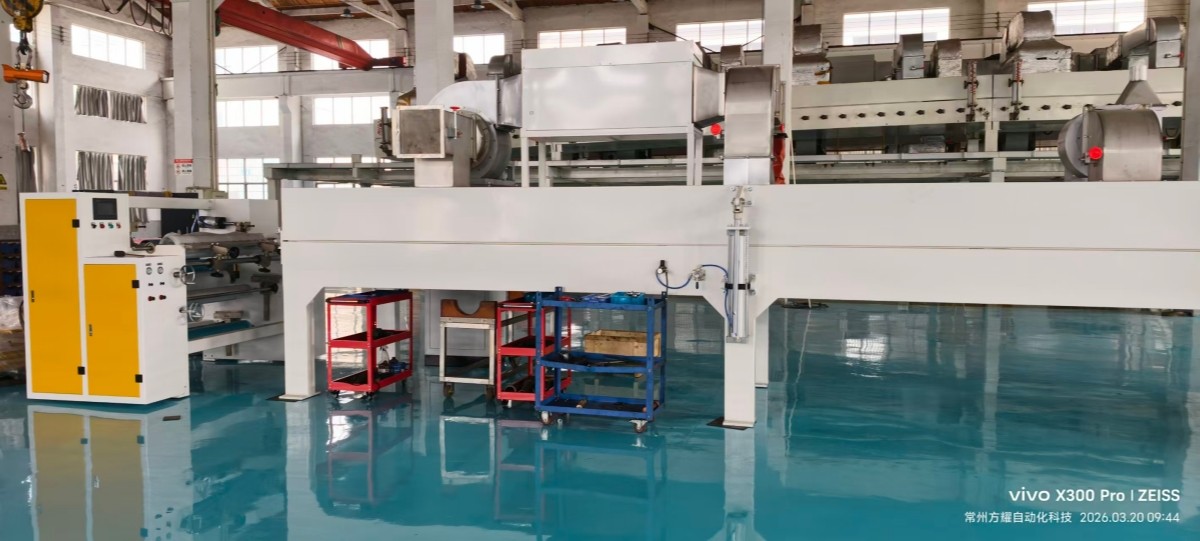
3. Anti-fog coating: PET is used in environments with large temperature differences and humidity (such as freezers, hot meal boxes, and cold storage), where water vapor condenses into fine water droplets, causing light scattering and a white mist on the surface, making it difficult to see the interior clearly. The anti-fog coating allows water vapor to spread evenly and form an ultra-thin, transparent water film, without forming water droplets. The lenses, lunch boxes, and freezer door panels are always transparent, allowing consumers to see food and goods clearly
7. PET Recycling & Regeneration Progress
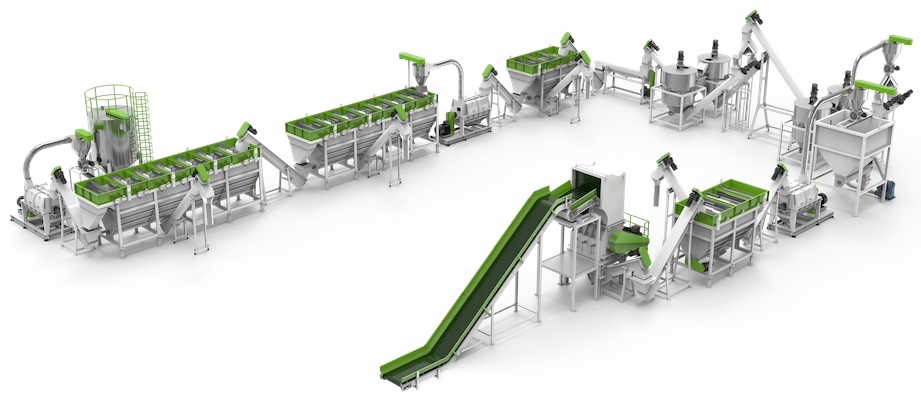
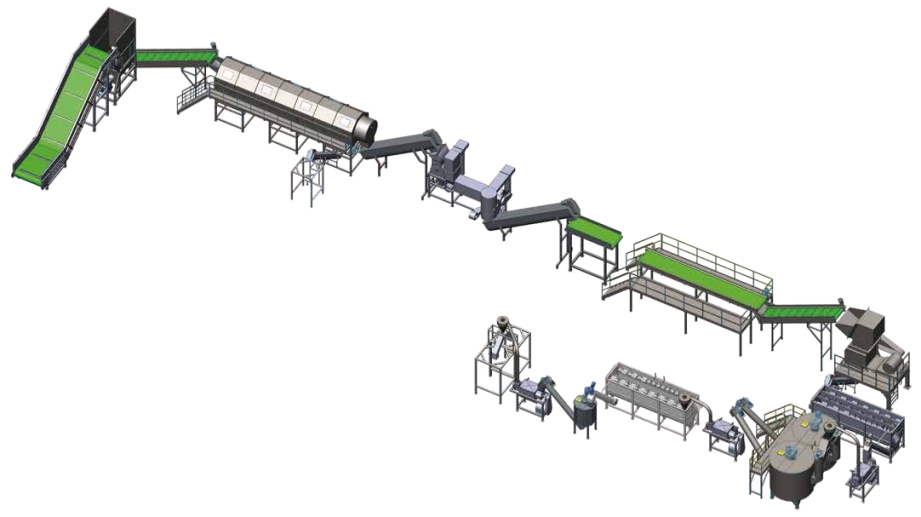
PET recycling remains a hot topic in the packaging industry. Recycling (crushing, washing, and regranulation) has matured, but material performance will inevitably be reduced after repeated recycling cycles. Chemical recycling has recently made breakthroughs by depolymerizing PET into monomers and then polymerizing them into raw-grade PET.
Researchers from the Institute of the Chinese Academy of Sciences have developed an efficient homogeneous degradation method. Using γ-valerolactone as the reaction medium and ethylene glycol as the solvent, PET can be controllably depolymerized into polyester glycol within 10 minutes at 170 °C, with a maximum yield of 94.2%.
More importantly, adjusting the dosage of ethylene glycol can precisely control the degree of polymerization between 4 and 13. When processing blended fabrics such as polyester cotton or polyester nylon blends, this technology selectively decomposes polyester components while maintaining the integrity of cotton and nylon fibers, solving the long-term challenge of mixed textile recycling. The research team also re-polymerized the degradation products back into PET, achieving a true closed-loop recycling cycle: PET → polyester diol → PET.
8. Common Production Defects & Practical Solutions
1. Bubbles & yellowing on PET sheet
2. Root cause: excessive moisture in raw material leading to hydrolysis inside the extruder.
3. Solution: tighten drying standards to keep pellet moisture below 50 ppm, or switch to high-capacity vented drying-free extruders for efficient moisture removal.
4. Whitening or fracturing at thermoforming corners
5. Root cause: insufficient heating, excessive local draw ratio, or irregular heat distribution inside ovens.
6. Solution: moderately raise heating temperature, rezone oven power distribution, increase mould corner radii, and reduce local stretching ratio.
7. Poor transparency & high haze
8. Root cause: high crystallinity and oversized spherulites formed during cooling.
9. Solution: speed up cooling roll cooling rate, adjust comonomer proportion, and add appropriate nucleating agents to improve crystal grains.
10. Sharp IV drop while processing recycled PET
11. Root cause: accumulated thermal degradation and chain scission after multiple recycling rounds.
12. Solution: add chain extenders to rebuild molecular weight, lower processing temperature as much as possible, and shorten melt residence time inside the barrel.
13. Poor coating adhesion & easy peeling
14. Root cause: insufficient substrate surface tension or poor compatibility between coating material and PET base film.
15. Solution: strengthen corona treatment to reach surface tension ≥42 dyne/cm, apply dedicated primer and optimize coating curing parameters.
Closing Thoughts
All the above content is a summary of my actual production and debugging experience in PET sheet and thermoforming factories. PET manufacturing covers polymer materials science, extrusion, thermoforming, coating, and recycling. Daily production management does not require profound academic knowledge. Mastering the three core rules - moisture control, crystallization regulation, and prevention of thermal degradation - can successfully solve most on-site production problems. I hope these practical experiences can bring value to peers in the packaging and plastic extrusion industries.
CONTACT US
Table of Contents
- Basic PET Properties & Real-Life Applications
- On-site PET Sheet Extrusion Technology
- Practical Ways to Achieve High Transparency
- PET Thermoforming Operation Tips
- Formulation Design & Auxiliary Machine Selection
- Coating & Lamination Industrial Applications
- PET Recycling & Regeneration Progress
- Common Production Defects & Practical Solutions
- Closing Thoughts
- CONTACT US
Changzhou Jwell Machinery Co., Ltd. Established in 1997, JWELL has been ranked as top 1 in the Chinese extrusion industry for more than 15 consecutive years. As a global supplier of complete solutions for extrusion technology. JWELL has a long history and rich technology accumulation. With more than 1,016 patents and 9 production bases. Attending for endurance, striving for innovation and focus on customers' experience is JWELL'S permanent enterprise spirit, JWELL people actively confront with new industrial challenge and new materials and new processes. We constantly accelerate the research and development of new technologies, focus on the new energy utilization, automotive lightweight composite materials and medical disposables and medical packages. We commit to the cutting-edge technology of plastic processing and recycling. Continuously innovate and develop extrusion equipment in the polymer subdivision field. JWELL has a modern assembly workshops, 9 large components processing workshops and precision CNC machines. Unique processing technology, we strive to ensure the stability of each component. Pay attention to parts inspection and quality control and ensure the precision and reliability of all parts. Quality excellent, perfect as one.exceptional customer satisfaction. We understand and respect customers' vision and strategy. With our professionalism and dedication, we continuously improve the quality of our products, provide customers with overall solutions. And constantly create value for customers.


