EN
EN ES
ES PT
PT AR
AR RU
RU FR
FR BG
BG HR
HR DA
DA NL
NL DE
DE EL
EL IT
IT JA
JA KO
KO NO
NO PL
PL RO
RO SV
SV TL
TL IW
IW ID
ID LT
LT SR
SR UK
UK VI
VI ET
ET HU
HU MT
MT TH
TH TR
TR FA
FA AF
AF MS
MS SW
SW BE
BE IS
IS AZ
AZ KA
KA LA
LA ZU
ZU KK
KK TG
TG UZ
UZ KY
KY XH
XH

Products
- Plastic Sheet & Plate Extrusion Machine
- Plastic Film Extrusion Machine
- Special Engineering Plastic Extrusion Machine
- Prepreg Tape &Composite Production Line
- Plastic Pipe Extrusion Machine
- Plastic Profile Extrusion Machine
- Plastic Recycling Solution
- Plastic Compounding Machine
- Blow Molding Extrusion Machine
- T-die/Roller/Screw/and/Core Components
- Pulp Molding Machine
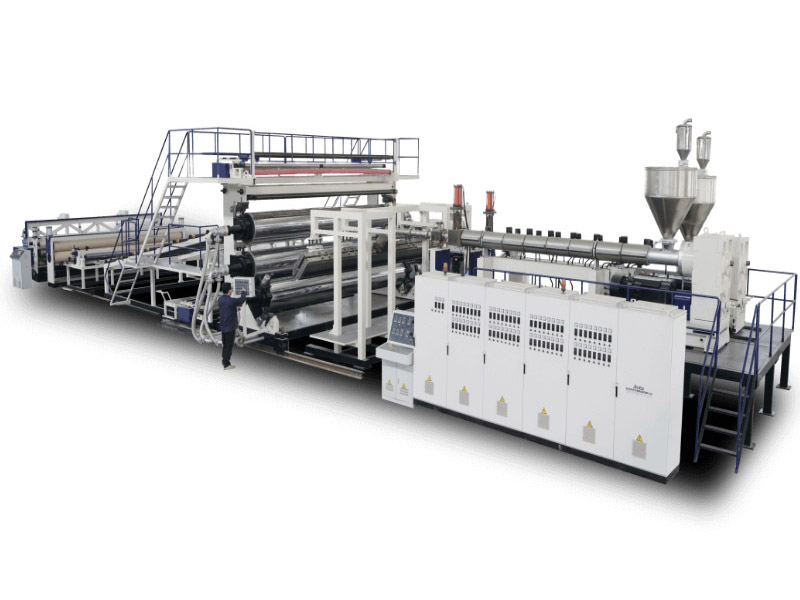
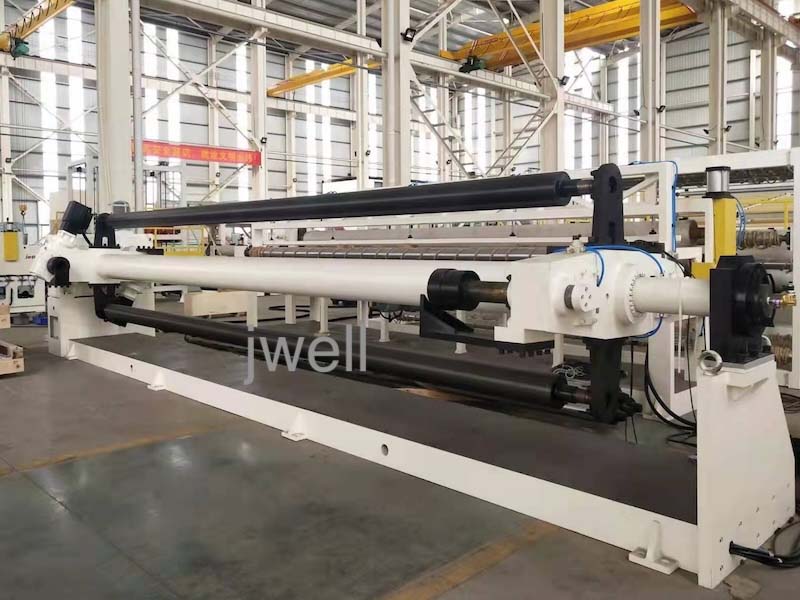

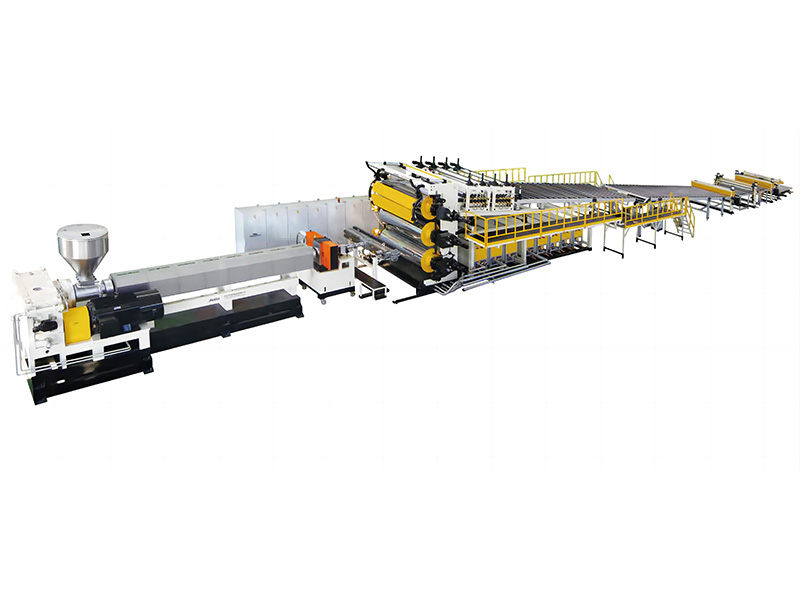
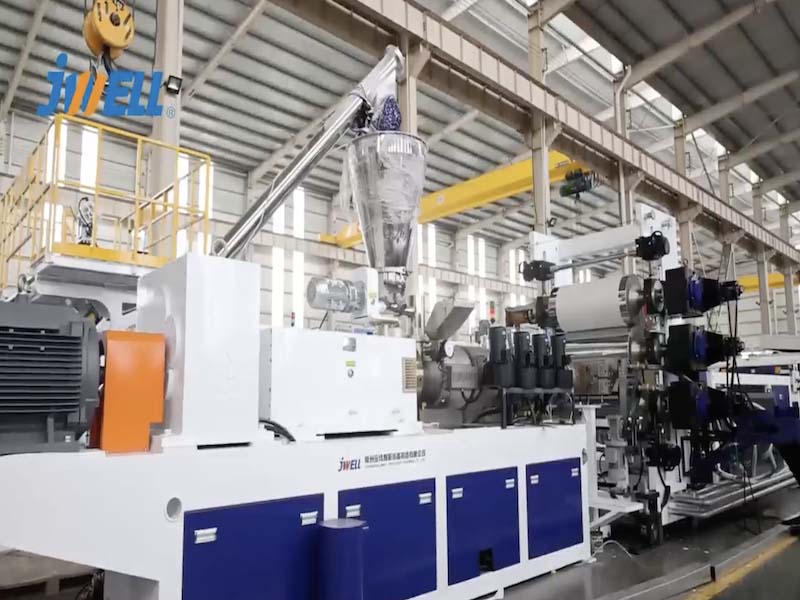
Wide-width Geomembrane Waterproof Sheet Production Line
| Place of Origin: | China |
| Brand Name: | JWELL |
| Certification: | CE ISO TUV UL, QS, GMP |
| Minimum Order Quantity: | ≥1 |
| Price: | To be negotiated |
| Delivery Time: | 90 days |
| Payment Terms: | T/T, L/C |
| Warranty: | One year |
| International Commercial Terms: | FOB, CIF, CFR, EXW |
Product Description
8-Meter Waterproofing Membrane Production Line
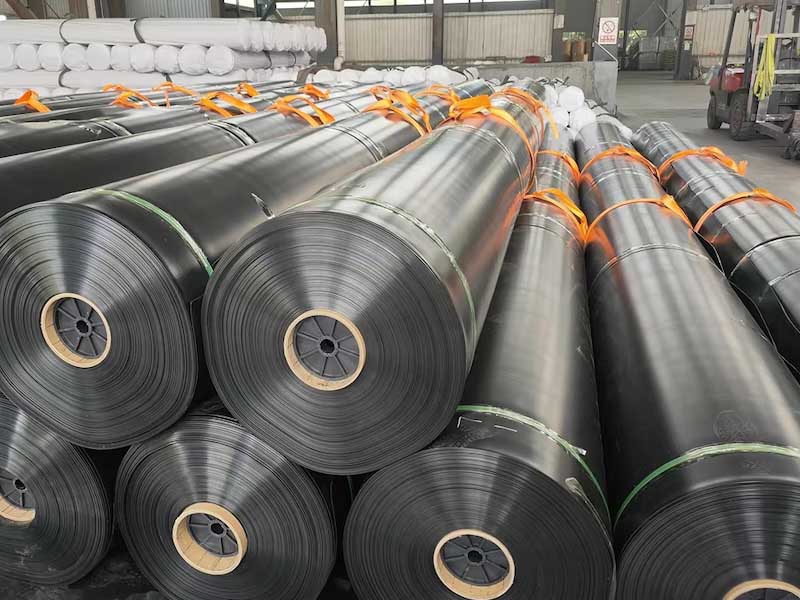
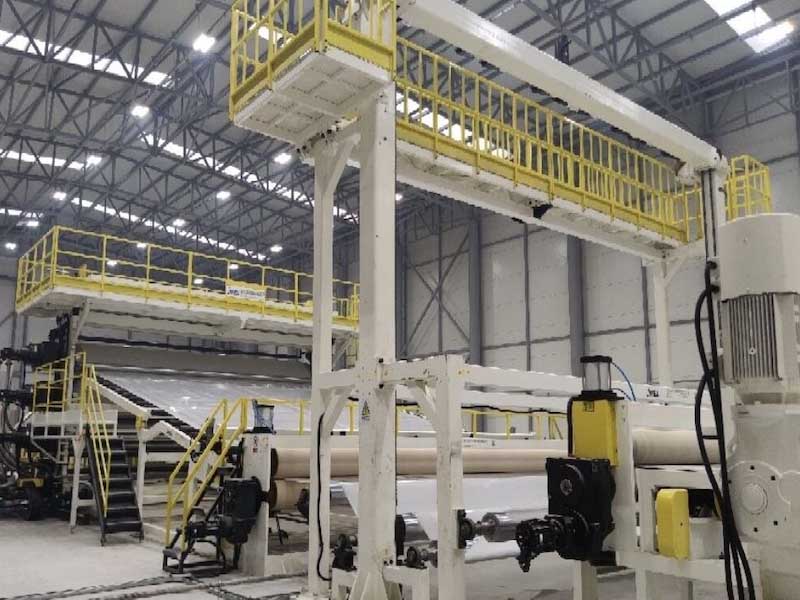
The 8-meter waterproofing membrane production line is a high-end manufacturing system that integrates polymer chemistry, mechanical automation, precise temperature control, and online detection. It is renowned for its ultra-wide width, high efficiency, and high stability, primarily used for producing high-performance polymer (HDPE/TPO) and modified asphalt waterproofing membranes.
Applications
Waterproofing of foundation slabs in large-scale building complexes, subway stations, railway stations, underground parking garages, and underground commercial streets.
Why It Is the Preferred Choice: These projects involve massive foundation slab areas.
The 8-meter wide geomembrane significantly reduces the number of overlap seams (potentially by over 80%), drastically minimizing leakage risks at the source and enhancing the overall integrity and reliability of the waterproofing system.
Tunnel and Utility Tunnel Engineering
Application Scenarios
● Highway tunnels, railway tunnels, subway tunnels, and urban utility tunnels.
Why It Is the Preferred Choice
● Tunnels feature annular structures demanding extremely high waterproofing performance and are challenging to maintain. The 8-meter wide geomembrane conforms better to tunnel contours, reduces longitudinal seams, and forms a continuous, complete waterproofing system that effectively resists groundwater infiltration.
Water Conservancy and Environmental Protection Engineering
Application Scenarios
● Reservoirs, wastewater treatment plants, artificial lakes, water channels, and landfills.
Why It Is the Preferred Choice
● These structures are extensive and large-scale, often submerged in water or exposed to corrosive media for prolonged periods. The wide geomembrane offers fewer seams, superior impermeability, and excellent durability, providing long-term, stable protection.
Large-Scale Public Building Roofing
Application Scenarios
● Metal or concrete roofs of airport terminals, convention and exhibition centers, stadiums, and logistics warehouses.
Why It Is the Preferred Choice
● These roofing projects cover vast areas and require rapid construction and high reliability. The 8-meter-wide geomembrane (particularly polymer membranes like TPO/PVC, produced using advanced extruder technology) enables high installation efficiency, delivers an aesthetically uniform appearance, and effectively addresses structural deformation and UV aging challenges.


Specifications
| Model | JW150/35+JWS150/35 | JW150/35+JWS150/35 | JW180/35+JW180/35 |
| Products Width(mm) | 4000 | 6000 | 8000 |
| Products Thickness(mm) | 0.8~3 | 1~3 | 1~3 |
| Capacity( kg/h) | 1500 | 2000 | 2000~3000 |
Competitive Advantage
Core Advantages of the 8-Meter Wide Production Line
Exceptional Efficiency
● The width is several times that of traditional production lines, resulting in high unit output and significantly reducing production costs.
Strong Reliability
● Dramatically reduces the number of on-site seams, lowering the risk of leakage from the source and enhancing the integrity of the waterproofing system.
Stable Quality
● Advanced automation control systems (PLC, ATC, EPC) ensure highly uniform and stable product performance and thickness across the entire width.
High-End Applications
● Perfectly meets the demand for ultra-wide, ultra-long, and high-performance materials in national large-scale infrastructure projects such as airports, subways, and water conservancy projects.
Product Processing
Core Process Flow
The process flow can be summarized into the following nine core steps:
Raw Material Handling → Melting & Extrusion → Forming & Embossing → Cooling & Sizing → Film Laminating & Combining → Online Monitoring → Traction & Edge Cutting → Automatic Winding → Finished
Packing & Delivery
Step-by-Step Process Analysis
1. Raw Material Preparation and Feeding
● Main Material Transport: Primary materials such as HDPE are delivered to storage silos via vacuum feeding systems.
● Precise Proportions: Additives like antioxidants and color masterbatches are accurately measured and proportioned according to the formula by automated dosing systems.
● Mixing and Drying: Raw materials are pre-mixed uniformly in high-speed mixers and dried to remove moisture, ensuring no bubbles are formed.
2. Melting and Extrusion (Core of the Production Line)
● Pre-mixed materials are fed into a twin-screw extruder, where they are heated, sheared, and wholly plasticized into a molten state through multi-zone temperature control (precisely regulated by PLC).
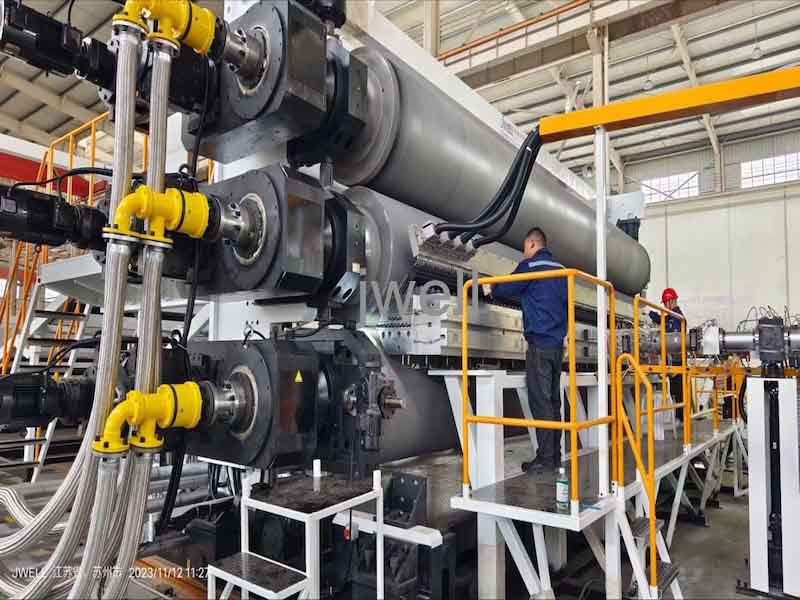
● Key Technology: The melt is extruded through a precision T-die wide-width extrusion die head, forming a uniform sheet. The design and temperature control of the die head are critical to ensuring consistent output across the 8-meter width.
3. Forming and Embossing
● The molten sheet immediately enters a three-roll calender, where preliminary shaping, thickness calibration, and desired surface finish are achieved by adjusting roll gaps and temperature.
● Embossing rolls can be used to create patterns such as reinforcement ribs, enhancing adhesion to concrete, as required.
4. Cooling and Sizing
● The high-temperature sheet enters a multi-stage cooling roller unit, where it is gradually cooled and fully sized using circulating cooling water.
● Uniform cooling is crucial to preventing product shrinkage, deformation, and internal stress.
5. Film Laminating and Combining
● A self-adhesive compound (e.g., butyl rubber) is applied to the lower layer of the sized sheet.
● A silicone release film (anti-adhesive) or other materials (e.g., non-woven fabric) are precisely laminated.
● Challenge for 8-Meter Width:* This step requires precise control of the release film’s tension and alignment to prevent wrinkling and misalignment.
6. Online Monitoring and Automatic Correction
● Thickness Control (ATC): A β/ β/X-ray thickness gauge scans the entire width, providing real-time data feedback. The system automatically adjusts the die head to ensure minimal thickness tolerance across the 8-meter width.
● Automatic Edge Position Control (EPC): Photoelectric sensors monitor the sheet’s position in real time, automatically driving adjustment rollers to ensure the sheet remains centered.
7. Traction and Edge Cutting
● The traction machine provides stable power to ensure uniform forward movement of the production line.
● Circular cutting blades trim both edges of the sheet to ensure precise width, with the trimmed edges recycled for reuse.
8. Automatic Winding
● A dual-position center winder is used to achieve automatic roll change without stopping, significantly improving efficiency.
● The winding tension is controlled by a PLC program, ensuring tight inner layers, loose outer layers, and neat roll formation.
9. Finished Product Inspection and Packaging
● The rolls are automatically weighed, measured, and labeled.
● After manual re-inspection, they are automatically packaged by a stretch film wrapping machine and stored.
Certification